Resources for Family/Friends of Military Suicides

Il Duce

Intel Enabler
Verified SOF
Joined
Jan 10, 2014
Messages
829
Location
New York
SSMP
Military Mentor
I just got a message from a friend from back home. Her nephew, an Iraq war veteran, committed suicide yesterday. She had spoken of him before, believe he was an enlisted infantryman 05-07 and has had some significant PTSD and adjustment problems.

My friend and her husband are wonderful people (they lead the youth group at my parents' church, and have since I was involved as a teenager - over 20 years ago) but have never served in the military and my home town is not much of a military community - Ft. Bragg is the closest post, about 2 hours away.

I'm wondering if there are current resources folks know about where family/friends connect and work through their grief? I figure there's a lot for spouses/parents but wondering about extended family/friends. Would appreciate any resources/guidance folks are familiar with.
 
Last edited:
Military One Source will provide just about anything and everything so long as it does not require intervention for a treatable condition - to which they will forfeit the rights to that individual to a medical care facility.
 
Putting this here instead of starting a new thread.
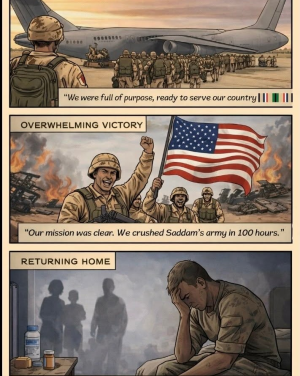
I wrote this. More accurately, I re-wrote this for a .mil audience, based on what I think is one of the most powerful pieces we ever published on my blog, The Havok Journal. It's about veteran suicide, and I hope that anyone who is contemplating going down that road will read this, and the poem that inspired it, and make the choice to live.

Veteran suicide is a serious issue, and suicide in our community outpaces the rate of our civilian peers. Last month was suicide awareness month, but that didn't prevent a spate of veteran suicides from happening.

"22 a day" is what the veteran community claims is what we lose to suicide. Whether that number is accurate or not, that's what we believe. That's what we talk about. To "become one of the 22" is a euphemism for veteran suicide.

To be clear, I'm fine. This isn't about me. It's about everyone who is out there, who is going through a hard time. This is your sign to keep going. This is your reason to live.

The Day After I Became One of the 22 • The Havok Journal

1759857743484.png
 
Putting this here instead of starting a new thread.
I wrote this. More accurately, I re-wrote this for a .mil audience, based on what I think is one of the most powerful pieces we ever published on my blog, The Havok Journal. It's about veteran suicide, and I hope that anyone who is contemplating going down that road will read this, and the poem that inspired it, and make the choice to live.

Veteran suicide is a serious issue, and suicide in our community outpaces the rate of our civilian peers. Last month was suicide awareness month, but that didn't prevent a spate of veteran suicides from happening.

"22 a day" is what the veteran community claims is what we lose to suicide. Whether that number is accurate or not, that's what we believe. That's what we talk about. To "become one of the 22" is a euphemism for veteran suicide.

To be clear, I'm fine. This isn't about me. It's about everyone who is out there, who is going through a hard time. This is your sign to keep going. This is your reason to live.

The Day After I Became One of the 22 • The Havok Journal

View attachment 48560

I've had a couple friends I served with at Bragg take their lives. I've also had a few friends from my EMS world take their lives, including my best friend, Kenny.

I'm not gonna lie and most don't know this but when Kim died in 2013 and while you all were here for me, I still contemplated suicide.

I sought therapy and never looked back. I wish those I loved would have reached out. We all have stories I presume.
 
To be clear, I'm fine. This isn't about me. It's about everyone who is out there, who is going through a hard time. This is your sign to keep going. This is your reason to live.
I am also fine. Suicide isn't an option, but my experience since leaving the military hasn't been all peachy. I'm not embarrassed to say I was the quintessential "lifer." I had purpose each and every day and the Army was my home and my family. I have actual family counting on me now and that's enough, but I have struggled with feeling alone and out of sorts since retiring. I have had decent civilian jobs, but it was never even close to the same. Again, I'm ok, but I certainly understand and am empathetic to the struggle for purpose.
 
^this is why it's so important for vets to have their second mission in mind before they get out.

I totally understand that experience. Almost none of us, especially those who served for a long time are going to be in a job clarity, comraderie, and credibility (some might even say "celebrity") that we had while in uniform.
 
^this is why it's so important for vets to have their second mission in mind before they get out.

I totally understand that experience. Almost none of us, especially those who served for a long time are going to be in a job clarity, comraderie, and credibility (some might even say "celebrity") that we had while in uniform.
My brother is a retired police officer. He always says our jobs were just jobs. I disagree, being a soldier is not just what I did...it's who I am. I think many vets struggle with identity after ETS.
 
Last edited:
My brother is a retired police officer. He always says our jobs were just jobs. I disagree, being a soldier is not just what I did...it's who I am. I think many vets struggle with identity after ETS.
He saw his work as a job. We saw ours as a profession.

I think I'd always rather work with "professionals" rather than "jobbers."
 
I think it's important to create a wall to separate the occupation from 'life.' I am not into the semantics of profession vs vocation vs job, etc. But if you can't dissociate what you do from who you are you are going to have problems. It doesn't matter how well you can wall it off, there can always be a problem with identity and where you fit in the world.

I am a nurse, but I still see myself as a paramedic.
I was both enlisted and an officer, but I still see myself as enlisted.
 
I think it's important to create a wall to separate the occupation from 'life.' I am not into the semantics of profession vs vocation vs job, etc. But if you can't dissociate what you do from who you are you are going to have problems. It doesn't matter how well you can wall it off, there can always be a problem with identity and where you fit in the world.

I am a nurse, but I still see myself as a paramedic.
I was both enlisted and an officer, but I still see myself as enlisted.

I find some solace in my hobbies, which provide a sort of "wall" and an identity. My hobbies are mostly the same hobbies I enjoyed before enlisting. I think a lot of vets are able to deal with it through hobbies, because they can't find a job they are as passionate about.
 
@Marauder06 this has always been of interest to me. Why do some people separate and integrate better than others? Not just the military, this happens in LE, EMS, fire, nursing/medicine. Why do some vets have to have the punisher sticker and wear t-shirts with the flag on the sleeve from vet-bro company and others are fine to walk away? I don't know the answers. I look forward to seeing what you come up with.
 
@Marauder06 this has always been of interest to me. Why do some people separate and integrate better than others? Not just the military, this happens in LE, EMS, fire, nursing/medicine. Why do some vets have to have the punisher sticker and wear t-shirts with the flag on the sleeve from vet-bro company and others are fine to walk away? I don't know the answers. I look forward to seeing what you come up with.
So that's probably a different, and much deeper, piece than the one I just had ChatGPT write for me. The one I just produced (and will probably publish next week) simply covers jobbers vs. pros. What you're proposing is much more interesting.

My hypothesis is... well, before I go into that, first of all I'm totally fine with "vet bro culture." I'm glad that people are proud to be vets, proud to be something they actually did rather than something that they either don't control, like what race or gender they were born into, or something they didn't have to really do anything to achieve, like declaring themselves to be a furry, or whatever.

But when it crosses the line to "dysfunctional veteran" culture, or if vets are soooooo wrapped up in what they did in the past that it negatively affects their present, then there's a problem.

OK. Now, my hypothesis. I think that people who have nothing else in their lives other than their veteran identity are the ones who have the most problems after service. They think, rightly or wrongly, that the only meaningful thing they ever did in their lives, and the only meaningful thing they will EVER do, is wear the uniform.

I'm super-proud of my long military service. I have AFG and IRQ magnets on my Gladiator. I have a bunch of military-related clothing that I often wear to the gym, not because I want to show off (it's an on-post gym; trust me no one is going to be impressed ;) ) but because it's what I have. My Facebook avatar is a picture of my detachment sergeant and me in Iraq.

...but that's not ALL that I'm about. I also see myself as a father, as a husband, as an educator. I volunteer as a deputy sheriff, not because i need the validation but because I still feel our country is worth fighting for. I write a lot, which helps process all of my during- and post-service thoughts.

And I have all of you. Even @AWP .

Veterans who only see themselves as having value while in uniform, who don't have a good post-military support network, and who don't have a meaningful second mission after service, are the ones most at risk.

^that's my hypothesis. ;)
 
So that's probably a different, and much deeper, piece than the one I just had ChatGPT write for me. The one I just produced (and will probably publish next week) simply covers jobbers vs. pros. What you're proposing is much more interesting.

My hypothesis is... well, before I go into that, first of all I'm totally fine with "vet bro culture." I'm glad that people are proud to be vets, proud to be something they actually did rather than something that they either don't control, like what race or gender they were born into, or something they didn't have to really do anything to achieve, like declaring themselves to be a furry, or whatever.

But when it crosses the line to "dysfunctional veteran" culture, or if vets are soooooo wrapped up in what they did in the past that it negatively affects their present, then there's a problem.

OK. Now, my hypothesis. I think that people who have nothing else in their lives other than their veteran identity are the ones who have the most problems after service. They think, rightly or wrongly, that the only meaningful thing they ever did in their lives, and the only meaningful thing they will EVER do, is wear the uniform.

I'm super-proud of my long military service. I have AFG and IRQ magnets on my Gladiator. I have a bunch of military-related clothing that I often wear to the gym, not because I want to show off (it's an on-post gym; trust me no one is going to be impressed ;) ) but because it's what I have. My Facebook avatar is a picture of my detachment sergeant and me in Iraq.

...but that's not ALL that I'm about. I also see myself as a father, as a husband, as an educator. I volunteer as a deputy sheriff, not because i need the validation but because I still feel our country is worth fighting for. I write a lot, which helps process all of my during- and post-service thoughts.

And I have all of you. Even @AWP .

Veterans who only see themselves as having value while in uniform, who don't have a good post-military support network, and who don't have a meaningful second mission after service, are the ones most at risk.

^that's my hypothesis. ;)

I don't have an issue with some of the vet-bro community. Some I do, for reasons.

I agree with a lot of your hypothesis. I see the same thing with the other communities in which I have been a part. I very much agree with the assertion of "But when it crosses the line to "dysfunctional veteran" culture, or if vets are soooooo wrapped up in what they did in the past that it negatively affects their present, then there's a problem.

OK. Now, my hypothesis. I think that people who have nothing else in their lives other than their veteran identity are the ones who have the most problems after service. They think, rightly or wrongly, that the only meaningful thing they ever did in their lives, and the only meaningful thing they will EVER do, is wear the uniform."

And again, although certainly applied to veterans, also applies to other professions as well. I read a book a few years ago (and by 'a few years' it could have been 2, it could have been 10), said a job with a very high suicide rate was priests/clergy who left the church, especially Catholic priests, for the reason you mentioned.

Being well-rounded (i.e., spouse, parent, other activities) is a sign of maturation for sure and is supported in the literature to reduce burn out and increase resiliency.

Good convo.
 
OK. Now, my hypothesis. I think that people who have nothing else in their lives other than their veteran identity are the ones who have the most problems after service. They think, rightly or wrongly, that the only meaningful thing they ever did in their lives, and the only meaningful thing they will EVER do, is wear the uniform.

The whole quote above, especially the bold. I think I've posted my thoughts on "shoulda', woulda', coulda'" which also ties into the above.

Those folks are really no different than the football jock who peaked in high school, or some other failed athlete, or whatever "back in my day" category you list. They created an identity that is temporary and not the "whole man."

We also need to remember that the 18-19 YO who enlists doesn't know anything else when they get out. If they didn't have an exit strategy, plan, skill, inkling of an idea...that new life will suck compared to the old. So they are now stuck in that memory loop and some never escape.

We didn't help those folks by placing servicemembers on pedestals.
 
Those folks are really no different than the football jock who peaked in high school, or some other failed athlete, or whatever "back in my day" category you list. They created an identity that is temporary.
I agree with this, but with a caveat. In my case, I've had "important" jobs since retiring. I think I'm a good father, husband, son, and brother. I don't sleep in my Ranger Up t shirt, but, professionally, nothing has matched up and I still feel like a soldier with no war or mission at times. I dont know if its more that I have no other identity, or maybe I just miss it.
 
The whole quote above, especially the bold. I think I've posted my thoughts on "shoulda', woulda', coulda'" which also ties into the above.

Those folks are really no different than the football jock who peaked in high school, or some other failed athlete, or whatever "back in my day" category you list. They created an identity that is temporary and not the "whole man."

We also need to remember that the 18-19 YO who enlists doesn't know anything else when they get out. If they didn't have an exit strategy, plan, skill, inkling of an idea...that new life will suck compared to the old. So they are now stuck in that memory loop and some never escape.

We didn't help those folks by placing servicemembers on pedestals.

We didn't have this issue back in the 80s and 90s pre-GWOT. People joined, people served, people got out and were productive members of society. I think it's largely a post-GWOT thing, where, to your point, we placed people on pedestals and there are a million books and movies about their legendary exploits.
 
We didn't have this issue back in the 80s and 90s pre-GWOT. People joined, people served, people got out and were productive members of society. I think it's largely a post-GWOT thing, where, to your point, we placed people on pedestals and there are a million books and movies about their legendary exploits.
In the 80s and 90s we didn't have the kinds of conflicts that led to 20+ year wars, either.

I don't get why people are against idolizing the military. People need heroes, and they're going to find them regardless. Why not look up to people who committed their lives to national service? What are the alternatives, actors, politicians, sports figures? I'm totally fine with "thank you for your service" culture. We SHOULD prop up the people who are risking their lives for the nation.
 
Back
Top